 By Rohit Mehra
 A ball of ground beef hits a screaming hot flat-top, gets pressed down hard with a spatula, and in ninety seconds becomes something genuinely better than a thick, carefully formed patty that took five times as long to cook. That’s not nostalgia talking or a fast-food marketing win. There’s real, provable chemistry behind why a thin, aggressively seared patty beats a thick one on flavor, even though it looks like the lazier, less “chef-like” approach. Here’s the actual reasoning.
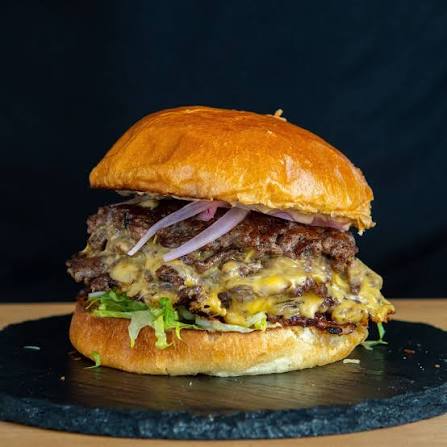
It All Comes Down to the Maillard Reaction
Everything about why smash burgers taste better traces back to one chemical process, and thin patties are simply built to maximize it.
- The Maillard reaction is what happens when proteins and sugars in meat are exposed to high heat, creating hundreds of new flavor compounds and that deep brown crust
- This reaction only happens on the surface of the meat, meaning more surface area exposed to direct heat equals more of that reaction happening
- A smashed patty, flattened thin and wide, has dramatically more surface area touching the hot pan relative to its volume than a thick, rounded patty does
- A thick patty can only develop that Maillard crust on its flat top and bottom, while its edges and interior never get anywhere near the heat needed to trigger the reaction
Surface Area Is the Whole Game
Once you understand the math behind it, the difference in crust coverage between the two styles becomes obvious.
- Smashing a ball of beef into a thin patty roughly doubles or triples the surface area in contact with the cooking surface compared to leaving it thick
- More contact area means more of the patty is actively browning and developing crust simultaneously, rather than most of the meat just heating through without ever crisping
- A thick patty essentially wastes most of its mass on interior meat that never gets hot enough, long enough, to brown — it just cooks to temperature and stops
- This is precisely why a smash burger can have crust on nearly its entire surface, while a thick patty only ever crusts its two flat faces
The Smashing Technique Itself Matters
It’s not just thinness that creates the effect — the actual mechanical act of smashing does something specific to the meat.
- Pressing the beef ball down hard and fast forces maximum, instant contact between the meat and the hot surface, rather than gradual contact as a preformed patty slowly heats
- That forceful contact also breaks up some of the meat’s structure at the surface, creating more textured, craggy edges than a smooth, pre-shaped patty
- Those craggy, irregular edges catch and hold even more heat than a flat, uniform surface would, creating extra crispy bits along the perimeter
- Timing matters here too — smashing needs to happen the moment the beef hits the pan, while the surface is still loosely packed and pliable enough to spread and crisp properly
Why Thin Doesn’t Mean Dry
The most common objection to smash burgers is that thin equals dried out, but that concern misunderstands how quickly the cooking actually happens.
- A smash patty cooks through in roughly 60-90 seconds total, which is genuinely too brief a window for significant moisture loss despite the thin profile
- Thick patties, by contrast, need several minutes to reach a safe internal temperature, and that extended cooking time is what actually dries meat out over time
- The intense, brief sear on a smash patty locks in juices faster than the slower, gentler cooking a thick patty undergoes
- As long as the beef has reasonable fat content, typically 80/20, the speed of the cook more than compensates for the reduced thickness
Multiple Patties Beat One Big Patty
Smash burger technique almost always stacks two or more thin patties rather than relying on a single one, and that’s a deliberate choice, not just aesthetic.
- Two thin, heavily crusted patties stacked together deliver roughly double the surface area and crust compared to a single thick patty of the same total weight
- Each individual patty gets its own independent full-surface sear, rather than sharing crust development across a larger single mass
- The layering also creates more textural contrast — crispy edges, juicy centers, melted cheese — bite after bite, rather than one uniform texture throughout
- This is why a “double smash” often ends up more flavorful than a single quarter-pound patty of identical total beef weight
Cooking Surface Choice Makes a Real Difference
The pan or griddle itself plays a genuinely important role in achieving the effect, beyond just technique.
- A flat-top griddle or heavy cast-iron skillet retains and transfers heat far more efficiently and evenly than a grill grate
- Grill grates leave gaps where the meat never touches direct heat, reducing the total crust-forming surface area even if you tried smashing on one
- A flat, solid surface ensures the entire smashed patty makes contact simultaneously, maximizing the Maillard reaction across the whole surface at once
- This is precisely why smash burgers are strongly associated with griddle cooking rather than traditional grilling, even though both use direct high heat
The Textural Payoff at the Edges
Beyond flavor chemistry, there’s a textural element that thick patties simply cannot replicate, no matter how well they’re cooked.
- Smash burgers develop thin, crispy, almost lacy edges where the meat spreads thinnest during smashing, creating a genuinely different bite than the interior
- Thick patties have no equivalent — their exterior and interior textures are far more uniform throughout the whole bite
- That contrast between crispy edge and tender center is a big part of why smash burgers feel more dynamic to eat, rather than a single consistent texture start to finish
- Combined with a soft bun and melted cheese, that textural range is arguably as important to the eating experience as the flavor chemistry itself
Frequently Asked Questions
Q. Do I need special equipment to make a proper smash burger at home?
Not really. A heavy cast-iron skillet and a sturdy metal spatula work fine; a flat-top griddle just makes it easier at scale.
Q. What fat ratio works best for smash burgers specifically?
80/20 is ideal. Leaner beef dries out too fast under high heat, while very fatty beef can cause excessive smoking and flare-ups.
Q. Should I season the beef before or after smashing?
After. Salt draws out moisture if applied too early, and it’s easier to season evenly once the patty is already flattened on the pan.
Q. Can smash burger technique work with a thick patty I already formed?
No, the technique specifically requires starting with a loose ball of meat, since the act of smashing itself is what creates the surface area and crust.