 By Saurav Mehra
 Walk into two identical living rooms with the exact same furniture, and you’ll genuinely notice one feels like a hotel suite while the other feels like an ordinary apartment, purely because of how the lighting was chosen and layered. Most Indian homeowners genuinely treat lighting as an afterthought, picking whatever fixture looks nice, without realising that false ceiling lights and pendant lights genuinely serve entirely different purposes, and the best-designed rooms genuinely use both together rather than choosing one over the other.
Here’s why understanding this genuinely matters before your next home renovation: false ceiling lights and pendant lights aren’t actually rival categories competing for the same job, they genuinely complement each other, one provides even, ambient illumination across your entire room, while the other creates focal drama above specific spots like your dining table or coffee table. Knowing when each genuinely earns its place in your lighting plan, rather than choosing purely on aesthetic impulse, determines whether your room feels professionally designed or simply adequately lit.
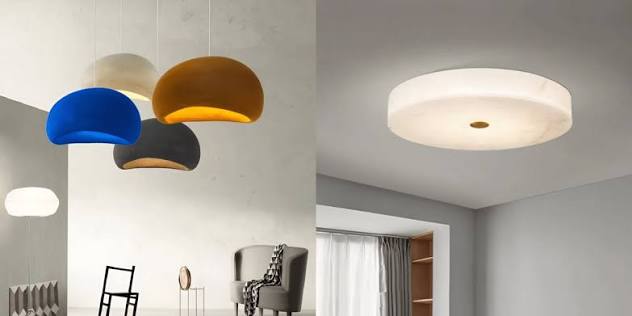
Why False Ceiling Lights Genuinely Provide Your Room’s Foundation
This is genuinely the core function false ceiling lighting serves. Recessed false ceiling lights offer subtle yet rich ambient downlighting, working as both general illumination and task lighting depending on placement, and they’re genuinely energy-efficient, making them easy on your electricity bill compared to running multiple decorative fixtures simultaneously. Cove lighting specifically, where curved or angled ceiling edges hide the light source entirely, creates a genuinely warm, diffused glow that fills the room gently rather than casting harsh, direct beams.
This ambient foundation genuinely matters because without it, your room relies entirely on whatever pendant or decorative lights you’ve chosen, which often creates uneven, patchy illumination, bright directly beneath the pendant, genuinely dim everywhere else. False ceiling lighting fixes this by distributing light evenly across your entire ceiling plane, giving you a genuinely functional baseline you can then layer decorative elements on top of.
Why Pendant Lights Genuinely Create the Focal Drama a Room Needs
It’s genuinely worth understanding what pendant lights accomplish that recessed lighting simply cannot. Pendant lights are a fantastic way to light up focal points, hanging above a dining table, a coffee table at the centre of your living room, or even hallways, creating visual interest that flat, recessed lighting genuinely can’t replicate on its own. A single suspended pendant fixture genuinely draws the eye downward toward a specific gathering point, exactly the effect you want above a dining table where family meals happen daily.
This focal-point function is precisely why interior designers genuinely recommend pendant lights specifically for compact rooms or above reading chairs and coffee tables, rather than as your room’s sole lighting source, since relying purely on pendant lighting genuinely leaves the rest of your room in comparative shadow.
Why the Genuinely Smartest Approach Combines Both Rather Than Choosing One
This is genuinely the most important insight for anyone planning their lighting layout. A well-designed contemporary living room genuinely needs a minimum of three light sources, one ambient layer through ceiling LED or recessed downlights, one task light like a floor lamp or adjustable pendant near seating, and one accent layer through LED strips or wall washers. This layered approach, following what some designers genuinely call a 30-30-40 rule, 30% ambient, 30% task, 40% accent, delivers the professionally designed feel that a single fixture type simply cannot achieve alone.
This genuinely means the real question isn’t “false ceiling lights or pendant lights,” it’s how you combine both, false ceiling recessed lighting and cove details handling your ambient foundation, while pendant lights genuinely add the focal drama above your dining table or living room centrepiece.
Why Dimming Circuits Genuinely Transform the Same Ceiling Into Different Moods
This is genuinely worth understanding as a practical upgrade worth requesting from your electrician. The same ceiling, with separate dimmer circuits for cove lighting, recessed spots, and pendant fixtures, can genuinely transform between distinctly different moods without any physical change, bright and functional during daytime with all circuits on, warmer and more relaxed in the evening with just cove lighting at reduced brightness alongside the pendant, and genuinely cinematic for movie nights with minimal ambient light and everything else switched off.
This flexibility genuinely justifies the modest additional wiring cost during your initial false ceiling installation, since retrofitting separate dimmer circuits later genuinely means reopening your ceiling, a considerably more disruptive and expensive proposition than simply planning for it from the start.
Understanding the Genuine Cost Involved
False ceiling installation itself typically costs ₹80 to ₹450 per square foot depending on material, gypsum being the most popular choice for Indian living rooms given its durability and support for varied lighting options. For a complete lighting setup in a standard 250 to 350 square foot living room, budget approximately ₹35,000 to ₹75,000 for mid-range fixtures from established Indian brands, climbing to ₹1,20,000 or more for premium imported designer fixtures if you’re genuinely investing in a statement pendant piece as your room’s centrepiece.
Why Ceiling Height Genuinely Determines What’s Actually Achievable
This is a genuinely practical constraint worth knowing before planning elaborate lighting layouts. Cove lighting and layered false ceiling designs genuinely work best above 10 feet ceiling height, below 9 feet, the drop required for a false ceiling structure genuinely makes the room feel compressed rather than elegantly layered. If you’re working with genuinely lower ceiling height, simpler recessed spotlighting combined with a compact pendant fixture genuinely achieves better results than an ambitious multi-layer cove design that would otherwise make your room feel cramped.
Frequently Asked Questions
Q1. Should I choose false ceiling lights or pendant lights for my living room, or genuinely use both?
Using both genuinely delivers the best result, false ceiling recessed or cove lighting provides your room’s ambient foundation, while pendant lights add focal drama above specific areas like a coffee table or dining space, together creating the layered lighting professional interior designs genuinely rely on.
Q2. Is a false ceiling genuinely necessary if I just want to install a pendant light above my dining table?
Not necessarily, a pendant light can genuinely be installed directly from your existing ceiling without a false ceiling structure, though a false ceiling does allow for additional ambient lighting and hides exposed wiring or ductwork if your room genuinely needs that cosmetic improvement too.
Q3. What ceiling height do I genuinely need for elaborate cove and layered lighting designs?
Cove lighting and multi-layer false ceiling designs genuinely work best with ceilings above 10 feet, below 9 feet, the structural drop required genuinely makes the room feel compressed, making simpler recessed lighting combined with a pendant fixture the better choice for lower-ceiling spaces.
Q4. Is it worth genuinely paying extra for separate dimmer circuits when installing false ceiling lights?
Yes, genuinely, separate dimmer circuits for your cove lighting, recessed spots, and pendant fixtures let you transform the same ceiling into completely different moods for daytime, evening relaxation, or movie nights, and it’s considerably cheaper to include this during initial installation than retrofitting it later.