 By Saurav Mehra
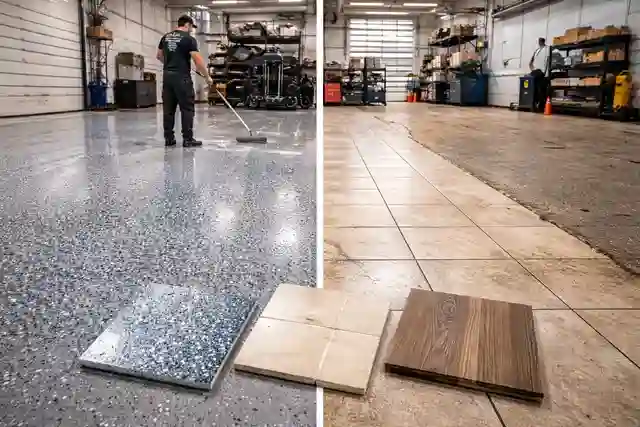
 Walk into any newly built garage or warehouse in India, and you’ll likely notice one of two things, either bare, grey concrete that’s already collecting dust and oil stains within months, or a smooth, glossy floor that looks considerably more finished and genuinely resists everything thrown at it. Here’s the detail worth understanding before comparing these two options, epoxy flooring isn’t actually a separate base material competing with concrete, it’s genuinely a protective coating applied directly on top of concrete itself.
Here’s why understanding this distinction genuinely matters before spending money on either option: what you’re actually deciding isn’t “concrete or epoxy,” it’s whether to leave your concrete bare or invest in coating it with epoxy for considerably better performance. Knowing exactly what this coating adds, and what it genuinely costs, helps you make a decision that fits your specific space, whether that’s a home garage, a factory floor, or a commercial kitchen.
Why Epoxy Genuinely Requires Concrete as Its Foundation
This deserves clarity upfront. Epoxy flooring is genuinely a resin-based coating system applied directly onto an existing concrete or tile surface, it cannot exist independently as a standalone floor. This means every epoxy floor you’ve ever walked on genuinely has concrete underneath it, the epoxy simply provides a protective, high-performance layer on top rather than replacing the structural floor entirely.
Understanding this genuinely reframes the comparison correctly, you’re not choosing between two competing materials, you’re deciding whether bare concrete’s raw, unprotected surface genuinely meets your needs, or whether investing in an epoxy coating genuinely delivers enough additional durability and appearance to justify the extra cost.
Why Bare Concrete Genuinely Struggles With Everyday Wear
Left uncoated, concrete flooring is genuinely the cheapest option upfront, but it comes with real, ongoing practical problems. Bare concrete collects dust and stains easily, and it genuinely needs sealing and periodic maintenance just to stay presentable, without this upkeep, it gradually becomes porous, absorbing oil, chemicals, and moisture that leave genuinely permanent marks over time. This is precisely why garages and industrial floors left unprotected typically look worn and stained within just a couple of years of regular use.
Concrete also genuinely generates dust continuously as its surface gradually wears, a genuine nuisance in any enclosed space, homes, offices, or factories, where this fine concrete dust settles on furniture, equipment, and breathing air alike, creating an ongoing cleaning burden that never fully resolves without additional protection.
Why Epoxy Coating Genuinely Solves These Specific Problems
Epoxy, once properly installed, creates a genuinely seamless, non-porous surface that doesn’t stain and doesn’t need frequent repairs the way bare concrete or even tiled floors eventually do. High-quality epoxy is genuinely non-toxic once cured and releases no harmful fumes, making it safe for homes with children and pets despite its industrial origins. This seamless quality also genuinely eliminates the dust generation problem entirely, since there’s no exposed, porous concrete surface left to gradually erode.
Beyond dust and stain resistance, epoxy genuinely provides impact resistance and a high-gloss, professional finish that bare concrete simply cannot match, which is precisely why epoxy has become the default choice for spaces needing both durability and a polished, presentable appearance, showrooms, commercial kitchens, and hospital floors among them.
Understanding the Genuine Cost Difference
This gap is worth understanding clearly before committing to either option. Basic epoxy coating for residential spaces typically runs ₹40 to ₹160 per square foot, while industrial-grade epoxy designed for heavy machinery and forklift traffic can range from ₹45 to ₹350 or more per square foot depending on thickness and quality. Bare, uncoated concrete remains genuinely the cheapest option upfront, but this initial savings comes with genuinely recurring costs, periodic sealing, cleaning, and eventual resurfacing that add up considerably over the floor’s lifetime.
It’s genuinely worth knowing that surface preparation alone can represent 20% to 30% of your total epoxy project cost, cracked, oily, or uneven concrete needs grinding, shot-blasting, or repair before epoxy can properly bond, and skipping this preparation step is precisely why some epoxy installations peel or bubble within just a year or two of application.
Why Thickness Genuinely Matters Based on Your Specific Use Case
This is where getting your epoxy specification right genuinely determines whether your floor performs as expected. Residential spaces typically need just 1 to 2 mm of epoxy thickness, commercial areas require around 2 to 3 mm, while industrial environments with heavy machinery or forklifts genuinely need 4 mm or more to withstand that kind of sustained mechanical stress.
Choosing insufficient thickness for your actual usage genuinely leads to premature wear and failure, a home garage coated with residential-grade epoxy but used for heavy vehicle repair work will genuinely wear through considerably faster than intended, making it worth being honest about your actual usage intensity when specifying your epoxy system rather than simply choosing the cheapest available option.
Why Cutting Corners on Installation Genuinely Costs More Later
This is genuinely one of the most important warnings worth heeding before choosing a contractor. A quality epoxy job requires a minimum three-coat system, primer, pigmented base coat, and a clear or polyurethane topcoat, and contractors who skip the primer or topcoat to save you ₹10 to ₹15 per square foot upfront are genuinely cutting your floor’s lifespan roughly in half. A floor done incorrectly will genuinely peel within one to two years, ultimately costing more to redo than whatever you initially saved by choosing the cheapest quote.
Similarly, skipping moisture testing on your concrete slab before applying epoxy is a genuinely costly mistake, if moisture is present, epoxy simply won’t bond properly and will peel within months, making this ₹2,000 to ₹10,000 testing and treatment step genuinely worth the investment rather than an optional add-on you can skip to save money upfront.
Frequently Asked Questions
Q1. Is epoxy flooring genuinely necessary, or can I just leave my garage floor as bare concrete?
You genuinely can leave it bare, but bare concrete stains easily, generates ongoing dust, and needs periodic sealing to stay presentable, epoxy coating solves all these issues with a durable, low-maintenance seamless surface, making it genuinely worth the investment for spaces seeing regular use.
Q2. Why does epoxy flooring sometimes peel or bubble within just a year or two of installation?
This genuinely happens when contractors skip proper surface preparation, moisture testing, or the full three-coat system, primer, base coat, and topcoat, cutting corners here to save a small amount upfront genuinely leads to premature failure and considerably higher costs when you need to redo the entire floor.
Q3. How thick should my epoxy coating genuinely be for a home garage compared to an industrial warehouse?
Residential spaces like home garages typically need just 1 to 2 mm of epoxy thickness, while industrial environments handling heavy machinery or forklifts genuinely require 4 mm or more, choosing insufficient thickness for your actual usage leads to considerably faster wear and premature floor failure.
Q4. Can epoxy be applied over an existing tile floor, or does it genuinely require bare concrete underneath?
Epoxy flooring can genuinely be applied to any existing tile or concrete surface, provided proper surface preparation, cleaning, degreasing, and roughening, happens first to ensure good bonding and prevent future peeling or bubbling beneath the coating.