 By Saurav Mehra
 Every winter, Indian households genuinely watch their electricity bill spike considerably, and for most homes, the geyser running twice daily is genuinely the biggest culprit behind that jump. A family of four using an electric geyser typically spends ₹1,500 to ₹2,000 monthly just heating water, money that quietly adds up to genuinely significant amounts over years of ownership. With India getting an average of 4 to 7 kWh per square metre of sunlight daily across most regions, the question genuinely worth asking is whether you’re paying for hot water your own roof could be providing for free.
Here’s why this decision genuinely deserves careful calculation rather than simply defaulting to whatever’s cheaper to buy today: an electric geyser genuinely costs less upfront, but a solar water heater’s higher initial investment often pays for itself within just 1.5 to 3 years given current government subsidies, then continues delivering genuinely free hot water for the remaining 15 to 20 years of its lifespan. Understanding this complete financial picture, rather than focusing purely on purchase price, determines which option actually saves you more money over time.
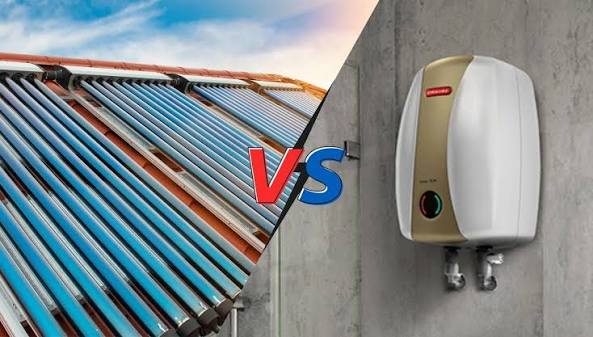
Why the Upfront Cost Gap Genuinely Tells Only Half the Story
This is where most people stop comparing, and it’s exactly why they miss the genuine bigger picture. Electric geysers typically cost ₹5,000 to ₹15,000, considerably cheaper than solar water heaters, which run ₹20,000 to ₹80,000 depending on capacity and panel type. On this measure alone, geysers genuinely win, and for anyone with a tight immediate budget, this upfront gap genuinely matters in the moment.
But this comparison genuinely ignores what happens after installation. A geyser continues consuming electricity every single day for its entire operational life, while a solar water heater’s running cost drops close to zero once installed, meaning your total spending trajectory looks genuinely opposite over time, geysers cost less initially but keep costing money indefinitely, while solar costs more upfront but essentially stops costing anything meaningful afterward.
Why the Genuine Long-Term Math Favours Solar Considerably
This is worth calculating properly rather than assuming purchase price settles the question. Over a 15-year period, a solar water heater can genuinely save ₹1,50,000 to ₹2,00,000 compared to continuing with an electric geyser, and with current government subsidies available in 2026, the payback period for that higher upfront investment can be as short as 1.5 to 3 years. This means for the remaining 12 to 18 years of a solar system’s typical 15 to 20 year lifespan, you’re genuinely enjoying free hot water while geyser owners keep paying their monthly electricity bill indefinitely.
One useful way to think about this concretely, invest ₹25,000 in a geyser paying roughly ₹18,000 annually in electricity, and over 10 years your total cost reaches approximately ₹2.05 lakh, while a comparable solar water heater at around ₹40,000 upfront delivers considerably lower cumulative cost over that same decade once its near-zero running expense is factored in.
Why Performance Reliability Genuinely Still Favours Electric Geysers
It’s genuinely worth being fair here rather than assuming solar wins on every measure. Electric geysers genuinely offer more consistent, on-demand performance regardless of weather conditions, they work identically whether it’s a bright sunny day or a cloudy monsoon afternoon, since they don’t depend on sunlight availability at all. Solar water heaters, while performing reliably in most Indian cities with strong sunlight most of the year, genuinely rely on their electric backup element during cloudy or heavily overcast periods, meaning performance can vary somewhat with weather in ways an electric geyser simply doesn’t experience.
This reliability difference genuinely matters more in regions with less consistent sunlight, or during extended monsoon stretches, where solar’s backup electric heating element essentially turns it into a geyser temporarily anyway, worth knowing before assuming solar eliminates your electricity dependence entirely.
Why Space and Living Situation Genuinely Shape Which Option Makes Sense
This is genuinely an underappreciated practical factor beyond pure cost calculation. Electric geysers are compact and wall-mounted, taking up just about 2×2 feet of space with installation completed in 2 to 3 hours, genuinely suitable for apartment dwellers who don’t have rooftop access or control over shared building infrastructure. Solar water heaters genuinely require rooftop space for their collector panels, making them considerably more practical for independent homeowners with their own roof access rather than apartment residents who can’t install rooftop equipment without building-wide permission.
This genuinely means the “better” choice often comes down to your specific living situation as much as pure financial calculation, an independent house owner genuinely captures solar’s long-term savings potential, while an apartment dweller without rooftop access genuinely has little practical choice beyond an electric geyser regardless of the compelling long-term solar math.
Why Heat Pump Water Heaters Genuinely Deserve Consideration Too
Worth knowing about as a genuine middle-ground option increasingly available in 2026, heat pump water heaters produce 3 to 5 units of heat for every 1 unit of electricity consumed, using 60 to 70% less electricity than a standard geyser while working reliably day or night regardless of sunlight, unlike solar. Costing ₹35,000 to ₹80,000 installed, heat pumps typically pay for themselves within 2 to 4 years through electricity savings, offering genuinely strong efficiency without solar’s weather dependency or rooftop space requirement, making this genuinely worth exploring specifically if you want efficiency gains without solar’s specific practical constraints.
Frequently Asked Questions
Q1. Is a solar water heater genuinely worth the higher upfront cost for a typical Indian family?
Yes, genuinely, for most households with rooftop access, current government subsidies bring the payback period down to just 1.5 to 3 years, after which the system delivers essentially free hot water for the remaining 12 to 18 years of its typical 15 to 20 year lifespan.
Q2. Can I genuinely rely on a solar water heater during cloudy or monsoon weather?
Most solar systems include an electric backup element specifically for this situation, meaning you’ll still get hot water during cloudy periods, though you’re essentially running on electric power temporarily during those stretches rather than enjoying solar’s genuine zero-cost operation.
Q3. Should apartment dwellers genuinely consider solar water heaters, or is an electric geyser the only practical option?
For most apartment residents without independent rooftop access, an electric geyser genuinely remains the more practical choice, since solar water heaters require rooftop collector panel installation that’s typically not feasible without building-wide permission and shared roof access.
Q4. Is a heat pump water heater genuinely a better choice than either a geyser or solar system?
It can be, genuinely, for households wanting strong efficiency without solar’s weather dependency or rooftop space requirement, heat pumps use considerably less electricity than a standard geyser while working reliably regardless of sunlight, though they cost more upfront than a basic electric geyser.