 By Saurav Mehra
 A plumber connects a standard white PVC pipe to your home’s geyser line, and within weeks, that pipe genuinely starts warping and eventually leaks, not because of poor installation, but because PVC simply was never built to handle hot water flowing through it. This exact mistake plays out in Indian homes more often than you’d expect, and understanding the genuine, fundamental difference between PVC and CPVC before your plumbing gets installed genuinely saves you from tearing open walls to fix a completely avoidable failure.
Here’s why this comparison genuinely matters beyond just picking whichever pipe your local hardware shop happens to stock more of: PVC and CPVC aren’t simply premium versus budget versions of the same product, they’re genuinely built for entirely different water temperatures, and using the wrong one in the wrong application genuinely leads to leaks, warping, and costly repairs that proper material selection would have avoided entirely from day one.
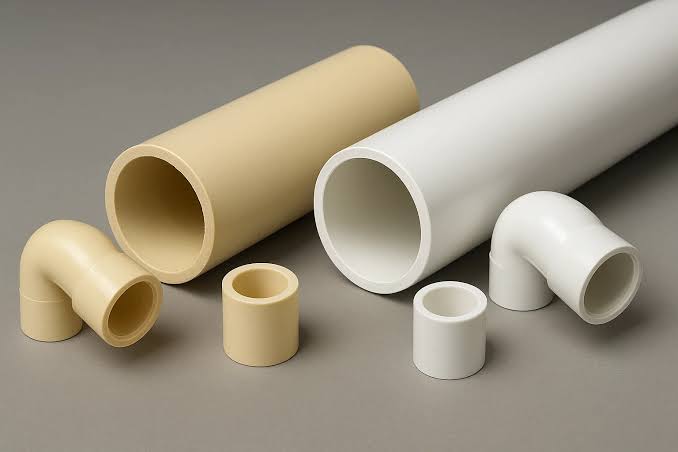
Why Their Chemical Difference Genuinely Determines Everything Else
This distinction matters before comparing anything else. CPVC, chlorinated polyvinyl chloride, is genuinely produced by adding extra chlorine to the PVC polymer chain during manufacturing, and this additional chlorination is precisely what raises its temperature resistance considerably beyond standard PVC’s capability. Regular PVC pipes remain unmodified in this respect, making them genuinely suitable only for cold water applications, borewell casing, rainwater, irrigation, and drainage, where high temperature exposure simply isn’t a concern.
This chemical difference genuinely explains why CPVC can handle hot water up to 93°C, comfortably managing your geyser’s output and hot water lines, while standard PVC will genuinely warp and leak if used for the same purpose, exactly the failure so many Indian households discover the hard way after installing the wrong pipe for their hot water plumbing.
Why CPVC Genuinely Dominates Modern Residential Plumbing
This is genuinely reflected in current market trends across India. CPVC has rapidly become the gold standard for residential indoor plumbing, and it’s currently the most widely specified plumbing pipe in Indian residential projects precisely because it handles both hot and cold water lines through a single, versatile material rather than requiring separate pipe types for different water temperatures throughout your home.
Beyond temperature resistance, CPVC genuinely offers corrosion resistance that keeps water flowing clean even in areas with hard water, and its fire-retardant, self-extinguishing properties add a genuine layer of safety that standard PVC simply doesn’t provide. This combination of versatility and safety genuinely explains why plumbers and builders increasingly specify CPVC as the default choice for concealed plumbing behind bathroom and kitchen walls.
Why PVC Genuinely Remains the Smarter Choice for Certain Applications
It’s genuinely worth being fair to PVC here rather than assuming CPVC wins universally. PVC is genuinely more cost-effective than CPVC, and for applications that never involve hot water, drainage systems, sewage lines, borewell casing, garden irrigation, PVC’s lower cost genuinely makes more financial sense without sacrificing any performance you’d actually need. PVC also offers genuine resistance to chemical reactions and soil acids, making it particularly well-suited for underground drainage applications where CPVC’s additional heat resistance simply isn’t relevant.
This means the smartest approach for most Indian homes genuinely involves using both materials strategically, CPVC specifically for your hot and cold water supply lines, and standard PVC for drainage, sewage, and any cold-water-only application where paying extra for heat resistance you’ll never use genuinely doesn’t make sense.
Understanding the Genuine Cost and Installation Trade-Off
CPVC genuinely costs more than PVC, and it requires slightly more careful installation, using solvent cement specifically designed for CPVC bonding rather than standard PVC adhesive. This additional cost and installation care genuinely pays off through longer-lasting performance in residential plumbing systems, CPVC pipes generally last longer than PVC when used within their intended hot and cold water applications, meaning the higher upfront cost often translates into genuinely better long-term value rather than simply being a premium tax you’re paying unnecessarily.
For homeowners genuinely balancing budget against performance, using CPVC specifically where hot water flows and PVC everywhere else genuinely gives you both cost efficiency and reliable performance, rather than either overspending by using CPVC throughout your entire plumbing system, or risking failure by using PVC anywhere hot water might eventually pass through.
Why India’s Climate Genuinely Makes This Choice Matter More
This is worth understanding as a genuinely India-specific consideration rather than a generic plumbing principle. India’s climate includes extreme heat, monsoon moisture, and considerably varying water pressure across different regions and building types, conditions that genuinely stress plumbing materials more than milder, more consistent climates might. Low-quality or mismatched pipes can genuinely crack, leak, or degrade faster under these specific Indian conditions, making correct material selection, not just brand choice, genuinely important for avoiding the frequent repairs that poor pipe selection eventually forces on homeowners.
Why Brand Quality Genuinely Matters Alongside Material Choice
Beyond simply choosing PVC or CPVC correctly, working with established, quality-certified brands genuinely protects your long-term plumbing reliability. Established manufacturers adhering to Indian standards like IS 4985 for PVC and IS 15778 for CPVC genuinely provide more consistent quality control than unbranded or uncertified alternatives, and this certification genuinely matters more for the pipes running through your walls than it might for a garden hose you can easily replace if it underperforms.
Frequently Asked Questions
Q1. Can I genuinely use standard PVC pipes for my geyser’s hot water line to save money?
No, genuinely never, standard PVC isn’t designed to handle high temperatures and will warp and leak when exposed to hot water from a geyser, CPVC is specifically engineered to handle temperatures up to 93°C and is the correct material for this application.
Q2. Is CPVC genuinely worth the extra cost compared to PVC for my entire home’s plumbing?
Not necessarily for your entire system, CPVC genuinely makes sense specifically for hot and cold water supply lines, but using it for drainage, sewage, or garden irrigation where hot water never flows means paying extra for heat resistance you’ll genuinely never need, standard PVC works perfectly well and costs less for these applications.
Q3. How can I tell if my home’s existing plumbing uses the correct pipe material for hot water lines?
Check with your plumber or building documentation for the specific pipe type used, if you notice warping, leaking, or unusual softness near your geyser or hot water outlets, this genuinely suggests standard PVC was mistakenly used where CPVC should have been installed instead.
Q4. Do CPVC and PVC pipes genuinely require different installation techniques?
Yes, genuinely, CPVC requires solvent cement specifically formulated for CPVC bonding and slightly more careful installation technique compared to standard PVC, using the wrong adhesive or rushing CPVC installation can genuinely compromise the joint’s long-term reliability despite the pipe material itself being correctly chosen.