 By Saurav Mehra
 A 68-year-old grandmother in Chennai genuinely starts forgetting her grandchildren’s names during her weekly video calls, and her family genuinely dismisses it initially as “just old age,” not realising this could genuinely be early Alzheimer’s disease, a condition where earlier diagnosis genuinely makes a meaningful difference to how the family can plan and support her. This exact scenario genuinely plays out across countless Indian households, brain health remains genuinely one of the most under-discussed aspects of overall wellbeing, even though it quietly governs literally everything you do, think, and feel.
Here’s why these facts genuinely deserve your attention beyond casual interest: neurological conditions genuinely affect a staggering proportion of people worldwide, India’s own burden is genuinely rising rapidly, and understanding these genuine patterns helps you recognise early warning signs in yourself or loved ones rather than dismissing them as simply part of getting older.
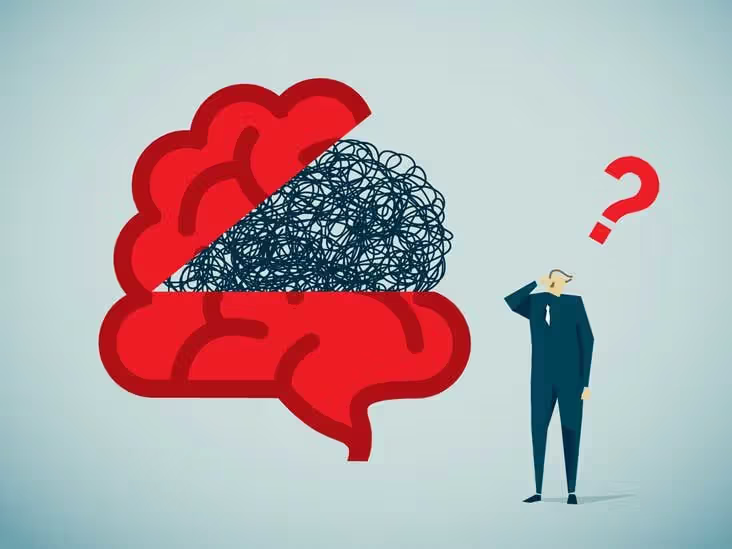
1. More Than One in Three People Will Genuinely Experience a Brain Disorder in Their Lifetime
This statistic genuinely deserves serious reflection. The World Health Organization has genuinely identified this as a major public health priority, recognising that more than one in three people will experience a brain disorder at some point in their lives. This genuinely means brain health isn’t a niche concern affecting only the elderly or unlucky few, it’s genuinely a widespread reality that touches an enormous share of the population eventually.
2. Neurological Disorders Are Genuinely the Leading Cause of Disability Worldwide
This deserves particular attention since it’s genuinely often overlooked compared to more commonly discussed health concerns. Neurological and psychiatric disorders are now the leading cause of disability worldwide and the second leading cause of death globally. This genuinely places brain health considerably higher on the list of health priorities than most people instinctively rank it.
3. Over 8.8 Million Indians Are Genuinely Living With Dementia Right Now
This figure genuinely captures the scale of India’s specific dementia burden. Estimates suggest over 8.8 million people are living with dementia in India, a number genuinely projected to more than double by 2050. This rapid projected growth genuinely reflects India’s ageing population combined with improving diagnosis rates, though it also genuinely signals a considerable healthcare and caregiving challenge the country will face in coming decades.
4. For Every Dementia Diagnosis, Three to Five Family Members Are Genuinely Affected Too
This is genuinely one of the most important, often overlooked facts about dementia specifically. For every person diagnosed, there are typically three to five family members whose lives are transformed alongside them, quietly and gradually, without much public acknowledgment. This genuinely reframes dementia as considerably more than an individual illness, it’s genuinely a family journey that reshapes caregiving responsibilities, finances, and daily life for everyone involved.
5. Alzheimer’s Disease Genuinely Accounts for 60 to 70% of All Dementia Cases
This distinction genuinely matters for understanding dementia terminology correctly. Alzheimer’s disease is the most common cause of dementia, accounting for 60 to 70% of all dementia cases, meaning while all Alzheimer’s is a form of dementia, not all dementia is genuinely Alzheimer’s specifically, other conditions can also cause similar cognitive decline through genuinely different underlying mechanisms.
6. Alzheimer’s Risk Genuinely Roughly Doubles Every Five Years After Age 65
This specific pattern deserves attention for understanding your own genuine risk trajectory as you age. While age is the greatest risk factor and risk roughly doubles every five years after 65, it’s genuinely worth knowing that Alzheimer’s is not exclusively a disease of old age, younger-onset cases, though less common, genuinely do occur and deserve equal medical attention when symptoms appear.
7. India’s Non-Communicable Neurological Disorder Burden Genuinely Doubled Between 1990 and 2019
This trend deserves serious consideration for understanding India’s changing health landscape. The contribution of non-communicable neurological disorders to India’s total disease burden genuinely doubled from 4.0% in 1990 to 8.2% in 2019, reflecting how conditions like stroke, dementia, and Parkinson’s disease have genuinely grown as major health concerns as India’s population ages and epidemiological patterns shift.
8. Stroke Genuinely Presents With a Recognisable, Consistent Warning Pattern
This deserves memorising since early recognition genuinely saves lives and brain function. In 90% of stroke cases, sudden weakness or numbness of the face, arm, or leg, usually on one side of the body, represents the most prevalent symptom. Recognising this genuinely specific pattern, sudden one-sided weakness, alongside facial drooping and difficulty speaking, and seeking immediate medical attention genuinely determines how much brain damage occurs, since early treatment remains genuinely critical for stroke outcomes.
9. Your Brain Genuinely Controls Every Single Function of Your Body
This deserves stating plainly since it’s easy to underestimate just how comprehensive the brain’s role genuinely is. The human brain controls every function of the body, from breathing and movement to thinking and emotions, making it genuinely the master control centre for literally everything you do, feel, and experience, rather than simply the organ responsible for conscious thought alone.
10. Millions of Neurological Conditions Genuinely Remain Undiagnosed or Untreated Worldwide
This deserves honest acknowledgement as a genuine, ongoing global healthcare gap. Millions of people worldwide suffer from neurological conditions that often remain undiagnosed or untreated, meaning considerable numbers of people, including genuinely in India, are genuinely living with unaddressed brain health issues that could benefit from proper medical evaluation and treatment if only the diagnosis happened in the first place.
Frequently Asked Questions
Q1. How can I genuinely tell the difference between normal ageing and early signs of dementia in a family member?
Normal ageing typically involves occasional forgetfulness that doesn’t disrupt daily life, while dementia involves a genuine pattern of worsening symptoms over months, memory loss disrupting daily activities, confusion about time, difficulty with familiar tasks, warranting neurological evaluation if you notice several of these signs together rather than isolated, occasional forgetfulness.
Q2. What should I genuinely do if I notice sudden facial drooping or one-sided weakness in someone?
Seek immediate emergency medical attention, since this genuinely represents the most common stroke symptom, and early treatment critically determines how much brain damage occurs, making this genuinely a situation where minutes matter rather than something to monitor and wait on.
Q3. Is dementia genuinely only something that affects very elderly people?
While age genuinely remains the greatest risk factor, with risk roughly doubling every five years after 65, dementia isn’t exclusively a disease of old age, younger-onset cases genuinely do occur and deserve the same prompt medical attention when symptoms appear regardless of the person’s age.
Q4. Why does dementia genuinely affect entire families rather than just the diagnosed individual?
Because caregiving responsibilities, financial planning, and daily life adjustments genuinely extend to typically three to five family members surrounding each diagnosed person, making dementia genuinely a shared family experience that reshapes relationships and responsibilities considerably beyond the individual’s own cognitive decline alone.